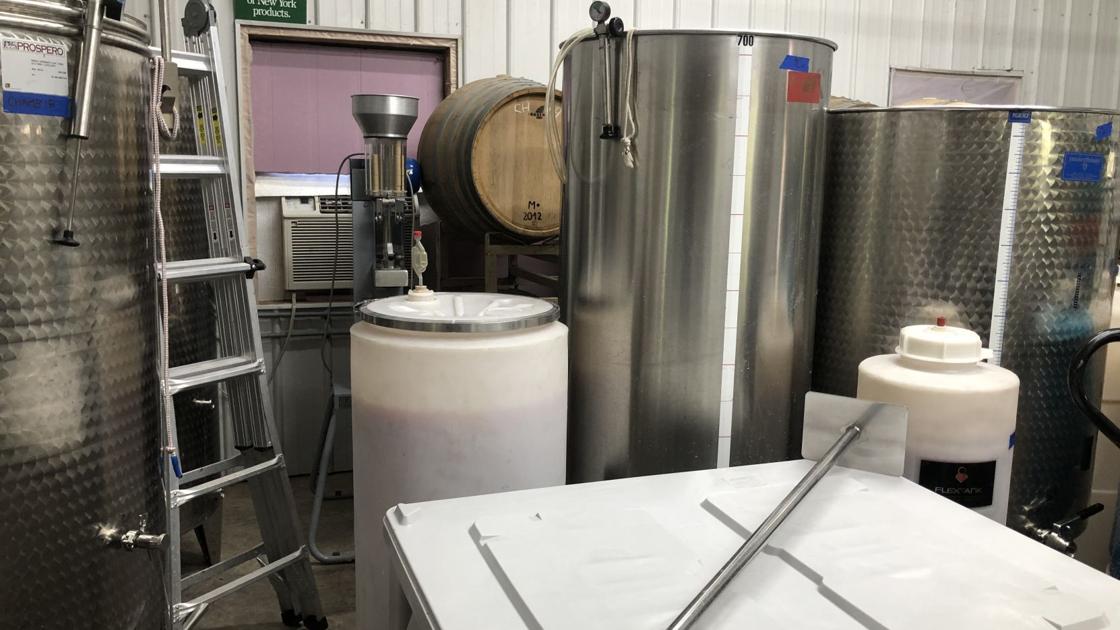
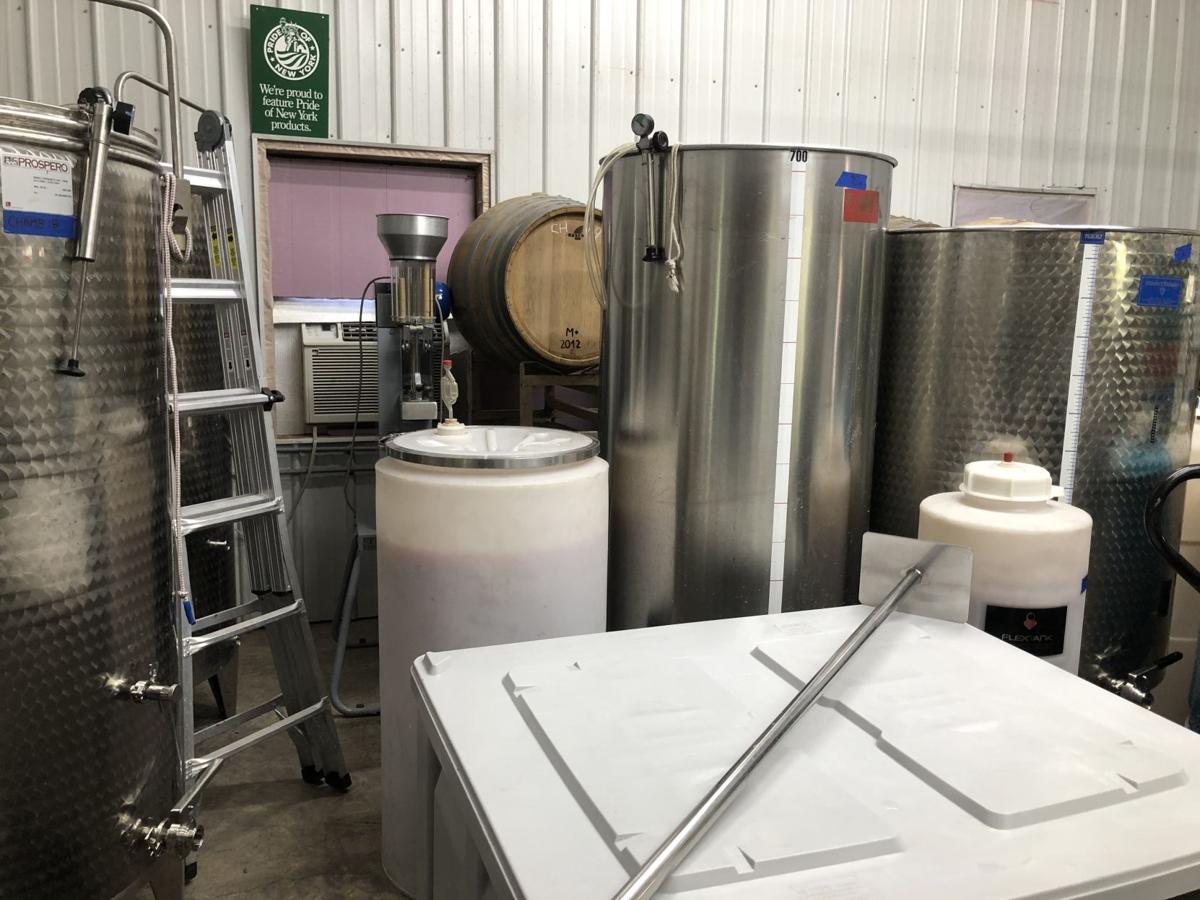
Fermentation and aging at CJS Vineyards & Aurelius Winery.

Chris Scholomiti
It's the first week in October, and we’re bringing in the last of our cabernet franc grapes from this year’s harvest. Typically, the cab is ready around the end of October. An early harvest for sure! This past spring was cold and wet, we had a late bud break on the vines, then summer kicked in on high, dry and hot, many 90-degree-plus days. We flirted with drought in July and August and according to our friends at Cornell’s Finger Lakes Grape Program, we had the driest September in 50 years! This hot, dry weather minimized mildew, fungi and other pests; therefore, less spraying was required to keep the vines and fruit healthy. Fruit quality was fantastic, as the heat drives up the sugar in the grapes and also reduces the acidity — all great things for the winemaker. A couple of light, frosty nights in late September thankfully didn’t really affect our vines. On the downside, some yields per acre were lower due to the near-drought conditions; less rain meant less weight per berry. We experienced anywhere from 5%-20% decrease in tonnage over a “normal” year, depending on the variety and the vineyard block. Other vineyards had normal yields, so it depended on who got rain and who didn’t, as many summer storms were localized throughout the Finger Lakes.
We are fortunate, and I believe the 2020 harvest and vintage will go down as a very special one for us here in the Finger Lakes.
The white and rosé grapes come to the crush pad, where they are weighed and sorted before getting crushed and de-stemmed. From there they go into our half-ton bladder press for gentle pressing; the grape juice is then pumped into a fermentation tank. A sample goes to the wine lab the next day for analysis. Checking the fresh juice is important to understand the sugar, acid, pH, YAN (yeast available nitrogen) and several other characteristics important to the winemaker. Lab results allow us to determine what, if any adjustments are necessary to ensure a good fermentation. Sometimes with low YAN we need to add yeast nutrients to allow the yeast to create a healthy fermentation. Several days later, we add yeast to the juice and off we go. Fermentation can take several weeks to go to completion. Red wines have a slightly different process. We first weigh, sort, crush and de-stem the fruit, then it’s pumped into 1-ton bins for testing, then fermentation. After 10-14 days of fermentation, the “must” (fermented red grape slurry) is pumped into the press and gently pressed out, and the new wine goes into oak barrels or stainless steel tanks to age. All the color in red wines can be attributed to the fermentation on the grape skins. Some of our red and white wines then will go through a secondary malolactic fermentation as they age. This changes the malic acid in the grape to lactic acid, making the wine softer and more palatable to the taste.
So, we’ll be busy fermenting for many upcoming weeks.
September was a good month in our tasting room, with many visitors from Auburn, Syracuse, Rochester, Pennsylvania, New Jersey, New York City and the Northeast. Our new reservation format, with walk-ins when space is available, has turned out well. Back in June, we had no idea how things would work out in this COVID-19 environment. Guests all arrive with a mask and take it off for tastings, food served is all pre-packaged, and it appears to work well for everyone. Since we have a small tasting room, we have to refer groups of more than six people to other nearby wineries with larger facilities.
This is a great time to visit Finger Lakes vineyards and wineries. When you walk in you can smell the fermenting grapes, knowing that process that started out pruning vines last winter has now come to its conclusion, as this year’s vintage is on its journey into wine!
Across the other side of our country, growers and wineries on the West Coast have faced devastation from wildfires that have destroyed wineries, and people’s livelihoods. Even if the winery was spared, many will still suffer from smoke damage to the grape crop. Exposure to heavy smoke over an extended period causes “smoke taint" to the grapes, producing a wine that smells like an ashtray. Our thoughts and prayers go out to our West Coast friends, hoping they can survive and make a comeback.
Chris Scholomiti is co-owner and winemaker at CJS Vineyards & Aurelius Winery, located at 6900 Fosterville Road, Aurelius. The winery's tasting room is now open by appointment, with tastings on the hour from noon to 4 p.m. Saturdays and Sundays, and by appointment on weekdays. The winery also offers curbside pickup and wine shipments. For more information, questions or comments about the column or wine and grape-growing in the Finger Lakes, email wine@cjsvineyards.com, call (315) 730-4619 or find the winery on Facebook.
Get local news delivered to your inbox!
October 09, 2020 at 06:00PM
https://ift.tt/36Pbh0k
Finger Lakes Wines and Grapes: 2020 shaping up to be special vintage - The Citizen
https://ift.tt/3eO3jWb
Grape


No comments:
Post a Comment