ELIZABETHTOWN — Upon further review, the third annual Grape Escape will wait until 2021.
The rescheduled event, first from September to mid-October, has been called off, the town of Elizabethtown said Monday. The move was made in conjunction with North Carolina Cycling, which has canceled all events in the near future because of the coronavirus.
The event winds through the country roads of Bladen County, connecting the award-winning famous wineries at Lu Mil Vineyard and Cape Fear Vineyard & Winery. There are routes of about 30 and 60 miles each that riders choose.
Proceeds from the weekend were to go toward scholarships at Bladen Community College. The college, the town and the Elizabethtown-White Lake Area Chamber of Commerce jointly sponsor the festivities.
Those wishing to still make donations to the college can contact the Bladen Community College Educational Foundation at 910-879-5519.
Alan Wooten can be reached at 910-247-9132 or awooten@bladenjournal.com. Twitter: @alanwooten19.
With those large purchases comes strong basis, and that is what we have been seeing in the Pacific Northwest market. At the beginning of September, the track PNW shuttle basis was at $1.08 over the December contract for October and $1.12 over the December contract for November. By the middle of the month, the November basis was at $1.15 over the December contract and as of Friday, Sept. 25, that basis was at $1.18 over the December contract. Given this strong basis, farmers in northern Midwest are seeing stronger than normal basis levels for this time of year.
Matthew Krueger, who farms in East Grand Forks, Minnesota, told me last week that, "Our corn basis was around 40 cents under the December contract, and typically this time of year we've been seeing the corn basis more like 70 cents to 80 cents under the December contract. There are great opportunities for growers this year with the rally and strong basis to squeeze some profit out of the market." That strength in basis levels bid to farmers is to entice them to sell corn to shuttle loaders who feed the PNW market.
The story is similar in the central U.S. where corn basis has spiked in areas where ethanol plants need spot corn to grind and end users need to cover commitments.
Matt Wiegand, FuturesOne commodity broker in Lincoln, Nebraska, said, "Corn basis hasn't really started to see much harvest pressure yet, with more of a focus on early soybeans so far, which is where we are seeing some of the early weakness, with some areas getting behind on train loading to start in the good yielding areas. Prior to that, the better ethanol margins helped to prop corn up. I'd say basis in my area is about 5 cents to 10 cents better for corn at this time."
In the Eastern Corn Belt, there are reports that basis levels in some spots are 20 cents to 30 cents stronger than normal, and this as harvest has started there. On top of that, end users are offering a break in drying charges, free delayed price contracts and some have been playing "name your price" to try and entice cash corn to move.
The cash corn price in the U.S remains strong for this time of year as recent exports sales and demand from end users, along with slow farmer selling, is keeping the price solid. We may see harvest pressure on the futures, but I think that with all the recent export business and domestic needs, the basis is going to likely stay above the DTN five-year average where it ended the old crop year and where it still is.
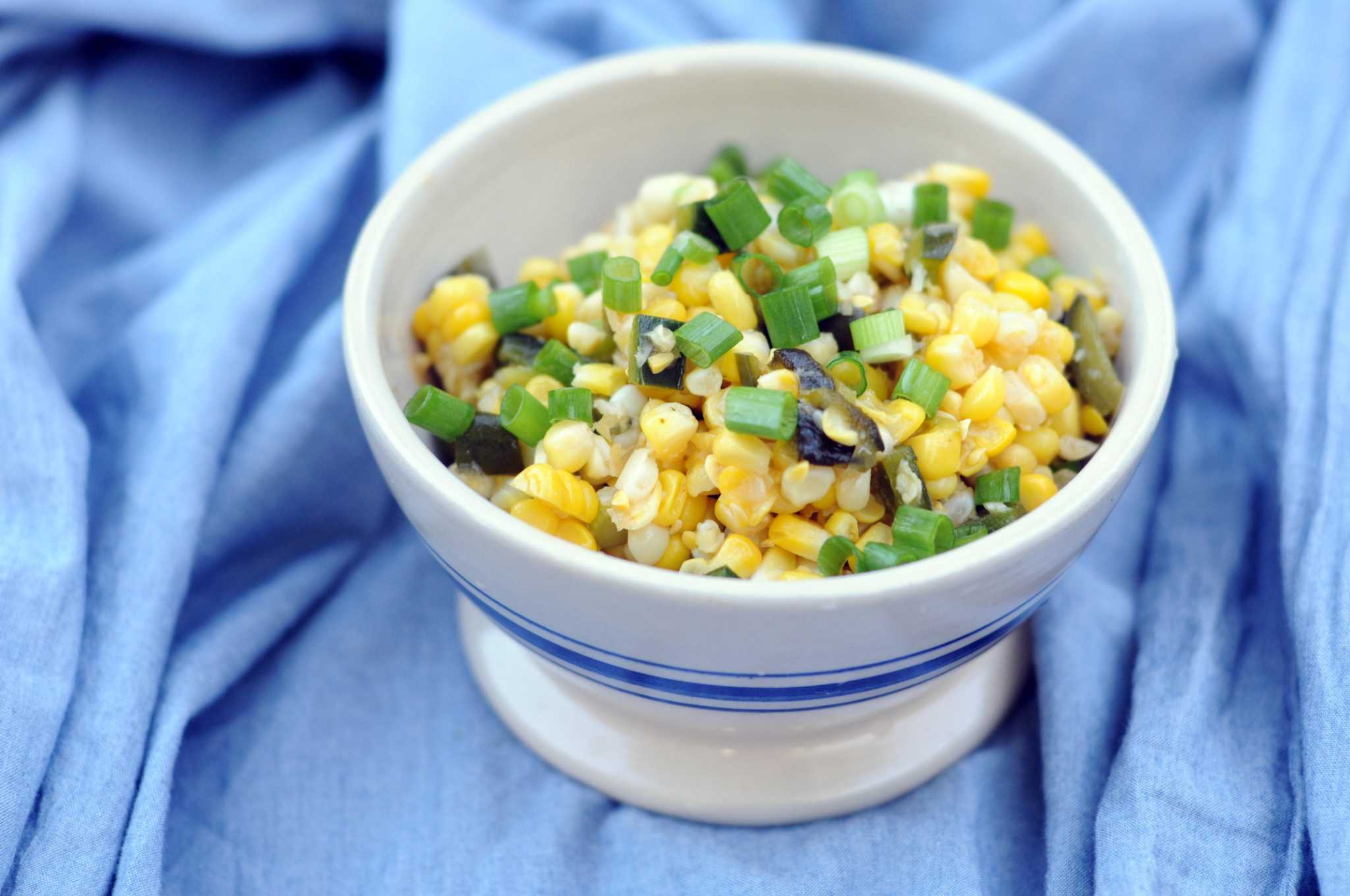
This easy campfire or fire pit salad is full of smoke and spice.
2 tablespoons fresh lime juice
3/4 teaspoon hot sauce (such as Frank’s Red Hot)
Kosher salt, to taste
4 ears of corn, in husk
2 small poblano chiles
3 tablespoons unsalted butter
2 scallions, chopped
Instructions: Whisk lime juice and hot sauce in a medium bowl; season with salt. Set dressing aside.
Place the corn (still in husks) and chiles about 3-4 inches from the embers of a fire, turning occasionally, until corn is charred all over (the husks will be nicely blackened and some of the kernels will become deeply browned in spots) and chiles are blackened in spots and crisp-tender, 10-12 minutes for corn and 8-10 minutes for chiles. Transfer to a platter and let cool slightly before shucking the corn.
Slather the corn with butter, then cut the kernels from the cobs and add to the bowl with the reserved dressing. Do not peel the poblanos, but remove the stem and seeds and dice the peppers. Add the diced chiles to the corn, along with the scallions. Toss to combine and season the corn salad with salt before serving.
Reduce heat to medium and add remaining 1 tsp. oil. Set a small handful of scallions aside for serving; add remaining scallions to skillet and cook, stirring often, until wilted and starting to brown, about 2 minutes. Add corn and cook, stirring, until kernels are well coated, about 2 minutes. Pour in mirin, 3 Tbsp. soy sauce, and 2 Tbsp. water and bring to a simmer. Nestle in tofu and cook until sauce reduces slightly, about 3 minutes. Swirl in butter and cook until sauce is glossy and coats tofu, about 2 minutes.
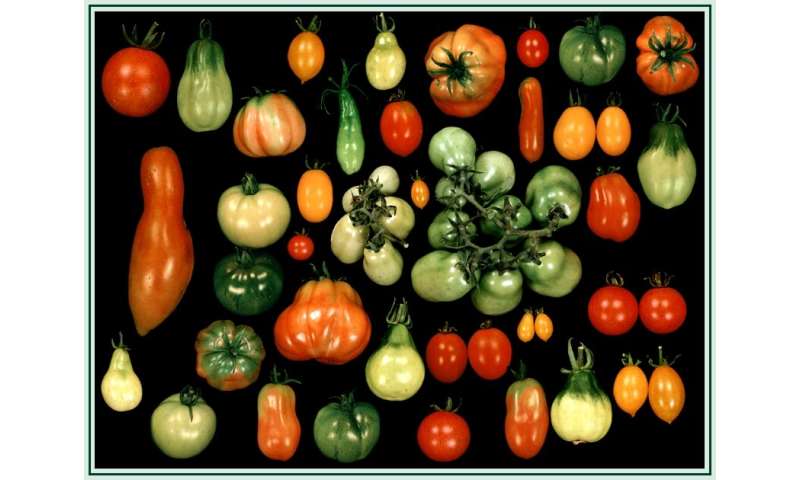
Wild tomato species represent a rich gene pool for numerous desirable traits lost during domestication. Among them are e.g. robustness in harsh environment or resistance to various pathogens. Credit: IPK
Wild tomato species represent a rich gene pool for numerous desirable traits lost during domestication. An international research team, including scientists from Weizmann Institute of Science and IPK, exploited an introgression population of wild desert-adapted species and a domesticated tomato cultivar to investigate the transfer of wild species-associated fruit traits on the genetic, regulatory and metabolic level. The results have been published in Nature Genetics.
Domestication and subsequent intensive breeding of tomato had a major impact on fruit ripening and the myriad metabolic processes accompanying it. In result, modern tomato cultivars exhibit a range of archetypal fruit characteristics, including e.g. texture, size, aroma, pigmentation and flavor. At the same time, continuous selection through breeding resulted in reduced genetic diversity and recurrent elimination of significant fruit qualities, such as robustness of plants in drought stress or resistance to various pathogens.
In this study, the scientists utilized advanced genetic resources, together with multimodal molecular and phenotype profiling, to perform an integrative QTL analysis in tomato fruit. The population of interest included 580 introgression lines developed in the lab of Prof. Dani Zamir from the Hebrew University of Jerusalem. Each of these lines carries a small fragment of wild tomato Solanum pennellii in the background of a modern tomato cultivar M82. The team of Prof. Asaph Aharoni from the Weizmann Institute of Science performed a multimodal profiling of fruits from the whole population, including RNA sequencing, mass spectrometry-based metabolomics and pathogen sensitivity assays at different developmental stages. The resulting massive data resource was used in a multi-level QTL analysis and allowed Dr. Jedrzej Jakub Szymanski, head of the research group "Networking and Modeling" at IPK and former researcher in Prof. Aharoni´s lab, to draw causal links between genetic sequence variation, quantitative changes in gene expression and metabolite levels, and changes of complex phenotypic traits.
From hundreds of identified interactions, the team picked several interesting candidates. "We focused on the impact of S. pennellii genes on human nutrition-associated secondary (specialized) metabolites and fruit resistance to pathogens, two very contrasting biochemical traits in the wild and domesticated tomato species," says Dr. Szymanski. The research team identified and characterized an enzymatic step in the predicted pathway wherein α-tomatine, the fundamental anti-nutritional and defense alkaloid present in green tomato fruits, is converted to esculeosides and lycoperosides during fruit ripening.
"This chemical shift is probably important for reducing the bitterness provided by α-tomatine and/or countering temporal needs for defensive fruit metabolites," says Dr. Szymanski. Furthermore, loci and genes associated with the accumulation of health-promoting flavonoids in the fruit skin tissue were delineated. The observed changes in gene expression and metabolism—for example, the accumulation of defense metabolites—also affected complex phenotypes, such as pathogen resistance. "In our study, we observed that increased resistance of fruits to a common fungal pathogen B. cinerea was reflected on multiple levels of cellular complexity—variation in gene sequence, gene expression, accumulation of specific metabolites. Networking these elements reveal mechanisms leading from changes on the molecular level to macroscopic effects relevant for plant survival and its commertial value," says Dr. Szymanski.
The large dataset generated in the study is a unique resource for the research community. "While we were able to characterize in depth only a few candidate genes and metabolites, the dataset can potentially be mined for tens, if not hundreds, more candidates and could be integrated with the wealth of published phenomics data available for the same introgression lines," says Dr. Szymanski.
Exploring the trajectory from wild to cultivated fruit is indispensable for a comprehensive understanding of fruit metabolism and the impact of human selection on both positive and negative fruit quality traits. "We anticipate that the genotype-phenotype associations inferred through this study will be a significant contribution to the current molecular breeding efforts to counter the recurrent elimination of key fruit quality traits such as flavor and pathogen resistance."
Provided by Leibniz Institute of Plant Genetics and Crop Plant Research
Citation: Analysis of wild tomatoes elucidates genetic basis underlying fruit traits (2020, September 28) retrieved 28 September 2020 from https://ift.tt/3cEfvZn
This document is subject to copyright. Apart from any fair dealing for the purpose of private study or research, no part may be reproduced without the written permission. The content is provided for information purposes only.
A new tomato venture in Northland could go some way in easing the spike in tomato prices seen during the winter period. Rohe Produce Limited plans to build a $70 million, 8.9-hectare, high-tech glasshouse at Marsden Point to grow organic speciality tomatoes.
The glasshouse will be the first of its kind in New Zealand with the use of 100 percent LED lights, which Rohe Produce said would increase yields by 50 per cent per square metre. Managing director Greg Prendergast, previously head grower manager at T&G Global, has been involved in the horticulture industry for four decades. He said tomatoes were a popular crop, but there was an opportunity to better serve New Zealand consumers.
The availability of a consistent supply of good quality tomatoes would develop and expand a market which until now had not had a regular source of large scale commercial organic production, he said. "You mostly see tomatoes at the moment hitting $12 or $15 a kilogram in retail markets simply because there's not enough tomatoes in New Zealand at the moment.
"As much as it's good and nice for a grower to get that kind of money, consumers don't want to pay that money. By having consistent yield through those winter periods we just make tomatoes more affordable for everybody."
The company earlier this week received $14 million loan from the Provincial Growth Fund. It is estimated about 200 construction jobs will be created for 12 to 18 months during the glasshouse build, and about 110 permanent jobs once operational year-round.